FDM 3D Printing
Industrial-grade fused deposition modelling for functional prototypes, durable jigs, and custom mechanical components in Adelaide.
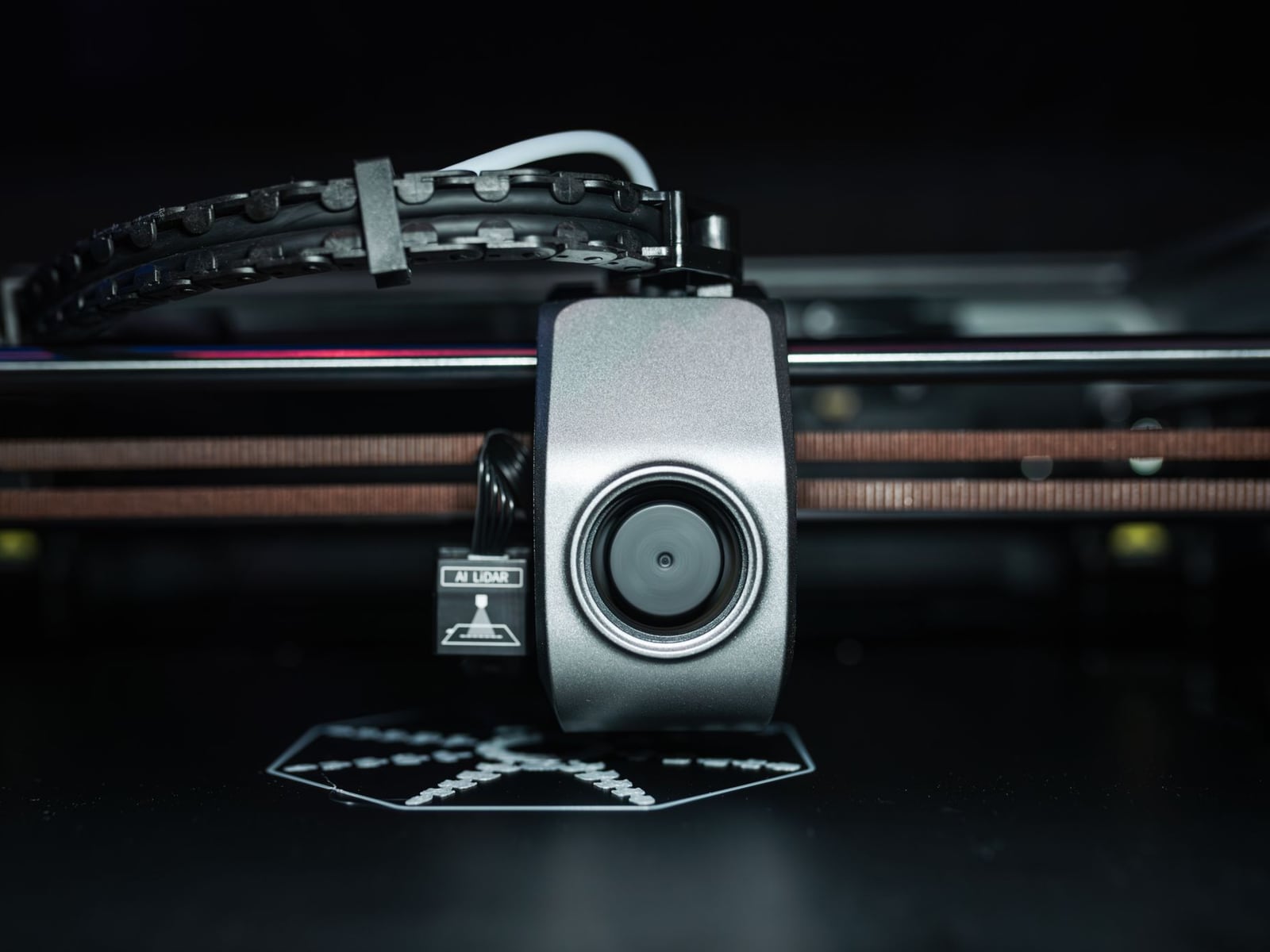
Fused Deposition Modelling (FDM) remains a cornerstone of rapid prototyping due to its versatility, material strength, and cost-efficiency. At Kopeclabs, we utilise a fleet of 14 precision machines to transform digital CAD files into tangible, high-performance parts. Whether you are an engineer validating a mechanical assembly or a designer creating a physical form study, our FDM workflow is optimised for structural integrity and dimensional accuracy.
Our Adelaide facility specialises in bridging the gap between a digital concept and a physical product. By leveraging a wide range of industrial thermoplastics, we provide parts that can withstand real-world stresses, heat, and chemical exposure. We focus on a rigorous approach to print settings, ensuring that every layer is fused correctly to minimise anisotropy and maximise the utility of the final component.
01 The FDM Production Process
File Analysis
We review your STL or STEP files to check for manifold errors, wall thickness, and overhangs to ensure a successful print without unnecessary waste.
Slicing & Strategy
Our engineers determine the optimal orientation, infill density, and support structures to balance strength with surface quality.
Precision Printing
The part is fabricated using calibrated extruders, maintaining a dimensional tolerance of 0.1mm across the build volume.
Post-Print Finishing
Removal of support materials and a final quality inspection to verify that the part meets the technical specifications provided.
Who is FDM Printing For?
FDM technology is specifically suited for clients who require structural durability over extreme surface smoothness. Our primary clients in South Australia include:
- Mechanical Engineers: For creating functional prototypes that need to be tested for fit, form, and basic mechanical stress.
- Industrial Designers: For rapid iterations of product housings and ergonomic studies.
- Workshop Managers: For producing custom jigs, fixtures, and assembly aids that reduce production time.
- Startups: For developing Minimum Viable Products (MVPs) that demonstrate functionality to investors.
- Architects: For large-scale conceptual models where structural stability is more critical than microscopic detail.
How the Workflow Operates
The collaboration begins with a technical enquiry. Once the CAD data is received, we perform a feasibility study. If the part requires specific mechanical properties—such as heat resistance or flexibility—we suggest the appropriate material from our range, including PLA, PETG, ABS, and TPU. After the technical specifications are agreed upon, a quote is issued based on the material volume and machine time.
Once the order is confirmed and the deposit is paid, the part enters our production queue. We monitor the print process in real-time to prevent failures. Upon completion, the part is cleaned and inspected. For B2B clients, we provide documented verification of dimensions where requested, ensuring the part integrates correctly into the larger assembly.
What You Need to Prepare
To ensure the fastest turnaround and a high-quality result, we recommend preparing the following before contacting us:
- Digital Files: STL, OBJ, or STEP files. STEP is preferred for technical parts as it allows for more precise modifications.
- Material Requirements: Specify if the part will be exposed to UV light, high temperatures, or mechanical friction.
- Tolerance Needs: Identify critical dimensions that must adhere strictly to the 0.1mm tolerance.
- Infill Preferences: Let us know if the part is purely aesthetic (low infill) or structural (high infill/solid walls).
- Quantity: Whether this is a one-off prototype or a small batch for testing.
If you are unsure about your file preparation, please refer to our detailed guide on how to prepare your model for 3D printing.
Deliverables and Final Output
Upon completion of the FDM process, the client receives a professional package containing the following items:
- The physical 3D printed part, cleaned of all support structures.
- Protective packaging to prevent damage during transit or handling.
- Digital photographic confirmation of the finished part sent via email before dispatch.
- For custom-designed parts, the final STL/STEP file is transferred upon full payment.
- Technical notes regarding the material used and suggested care for the part.
- Verification of dimensions for critical points if specified in the initial order.
Lead Times and Deadlines
Our average prototype lead time is 3 business days. This includes file analysis and print time. However, lead times can vary based on the complexity of the geometry and the total volume of the part. Larger parts with high infill percentages naturally require more machine hours.
For urgent projects, we offer an express service. An express surcharge of 30% is applied to move your project to the front of the production queue, significantly reducing the waiting period. All deadlines are communicated clearly at the time of the quote to ensure your project stays on schedule.
What is Not Included
To maintain a focused and professional service, there are certain items and services that fall outside our FDM scope:
- Certified Parts: We do not produce parts requiring aerospace, automotive, or medical certification.
- Prohibited Items: We strictly refuse the printing of weapons, weapon components, or illegal items.
- Copyrighted Models: We do not print copies of protected trademarks or third-party intellectual property without proof of licence.
- Advanced Chemical Smoothing: While we provide basic post-processing, intensive chemical vapour smoothing is handled as a separate request.
- Design Engineering: Basic file checking is included, but full redesigns are billed under our 3D Modelling service.
Pricing and GST Calculation
Our pricing for FDM printing is transparent and based on the actual consumption of materials and machine time. The cost is calculated per gram of material used, including the necessary support structures required to hold the part during printing.
In accordance with Australian law, all prices are quoted inclusive of 10% Goods and Services Tax (GST). For our B2B clients, we provide the breakdown showing the price excluding GST for accounting purposes. Minimum order values apply to ensure the viability of machine setup.
| Material Type | Price (inc GST) | Price (ex GST) | Unit |
|---|---|---|---|
| Standard PLA/PETG | A$1.80 | A$1.64 | per gram |
| Engineering ABS/TPU | A$3.20 | A$2.91 | per gram |
Please note that a 50% deposit is required for all new orders. For established B2B partners, payment terms are typically 14 days from the invoice date. All orders are subject to a minimum order value of A$45. For full details on payment and cancellations, please visit our Terms and Conditions.
FDM Service FAQ
What is the difference between PLA and PETG for my project?
PLA is ideal for visual prototypes and models that don't require much strength or heat resistance. PETG is a "middle ground" material—it is tougher than PLA and more heat-resistant, making it better for functional parts that might be used outdoors or in slightly warmer environments.
Can you print parts larger than 400mm?
Our maximum build volume is 450 x 450 x 600 mm. If your part exceeds these dimensions, we can discuss splitting the model into multiple interlocking components that can be bonded together after printing.
How accurate are the parts compared to a CNC machine?
FDM is a layer-based process and cannot match the micron-level precision of CNC milling. However, we maintain a tight tolerance of 0.1mm, which is sufficient for the vast majority of prototyping and jigging applications.
Do I need to provide the support structures in my file?
No, you should provide the "clean" geometry. Our engineers handle the slicing and support generation using standard software to ensure a reliable surface finish and structural integrity.
Ready to bring your design to life? Whether it is a single component or a small series of functional parts, our Adelaide team is here to assist. You can return to our full services hub to compare technologies or contact us directly for a technical consultation and a formal quote.